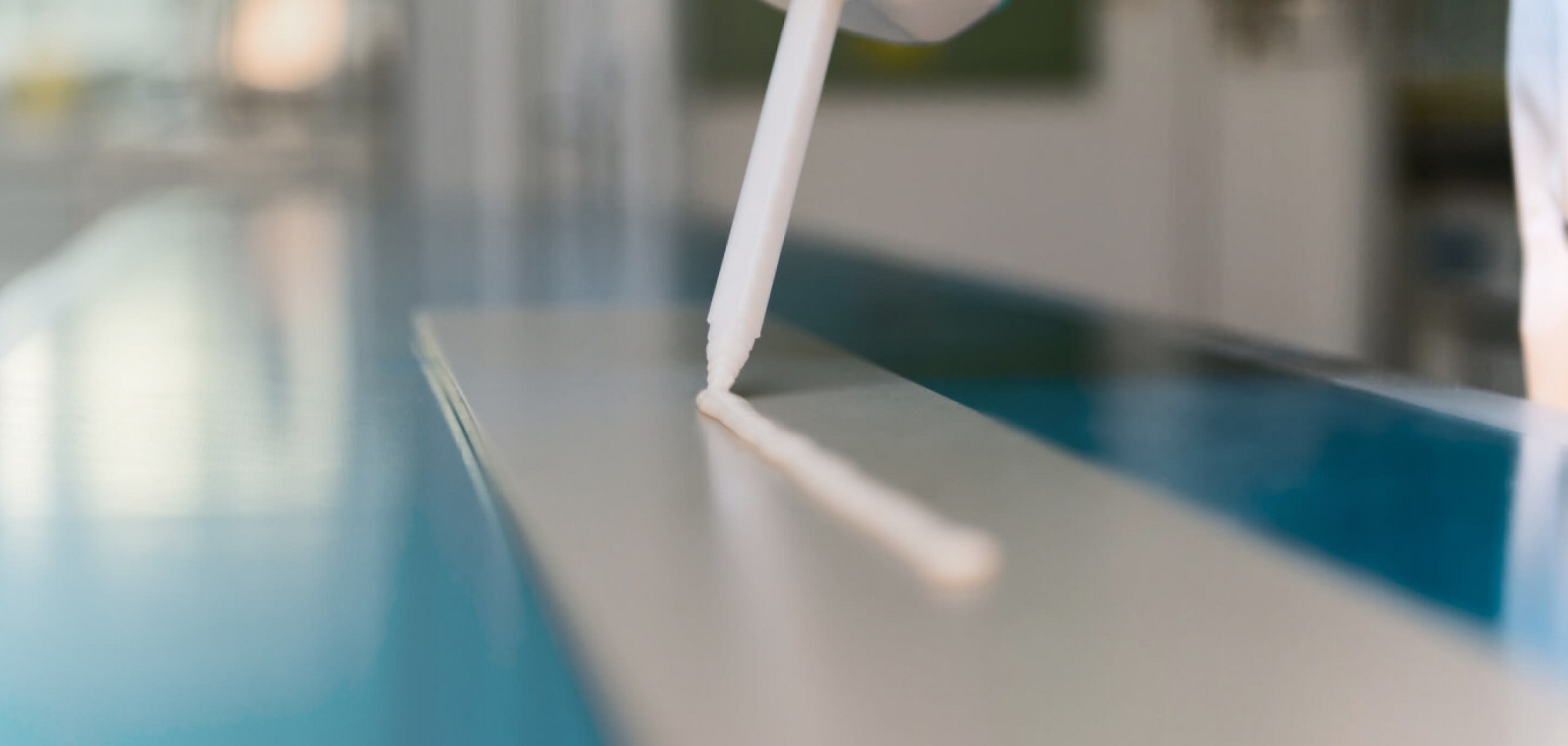
Double sided tape
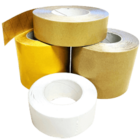
Today, industrial double-sided adhesives are a powerful alternative to mechanical fasteners such as screws, rivets, or welding. Unlike liquid glues, adhesive tapes offer instant bonding, clean application, and a flawless finish through totally invisible fastening. Whether assembling metals, low surface energy (LSE) plastics, or glass, our structural bonding solutions guarantee uniform stress distribution across the entire contact surface.
View more
What is an Industrial Double-Sided Adhesive?
An industrial adhesive consists of a carrier (backing) and a Pressure Sensitive Adhesive (PSA) mass. The assembly's performance depends on the synergy between the carrier type (acrylic foam, polyester film, transfer tape) and the adhesive chemistry (acrylic, rubber, or silicone). This system not only bonds but also seals, damps vibrations, and compensates for differential thermal expansion between dissimilar materials.
Why Choose ACROM Double-Sided Adhesives?
Advantage #1: Performance and Invisible Fastening
Double-sided adhesives allow for sleek product designs. By eliminating screw heads or rivets, you achieve a smooth surface that is easier to clean and aesthetically superior.
-
Mechanical Stress Distribution: Unlike mechanical fastening points that concentrate tension, the adhesive distributes the load across the entire joint. This technical feature extends the lifespan of your assemblies by limiting material fatigue and the risk of galvanic corrosion.
Advantage #2: Substrate Versatility and Compensation
A key strength of our technical adhesives lies in their ability to bond heterogeneous materials. For instance, a foam adhesive possesses natural resilience, allowing it to compensate for flatness gaps or surface irregularities.
-
Bonding Difficult Materials: Thanks to advancements in acrylic adhesive masses, our tapes offer exceptional performance on Low Surface Energy (LSE) plastics like polypropylene or powder-coated surfaces, where conventional solutions often fail.
Advantage #3: Speed of Implementation and Productivity
Integrating double-sided tape into your production line eliminates the drying times inherent to liquid glues. Adhesion is immediate (or near-immediate), allowing for instant parts handling and a drastic reduction in manufacturing cycles.
Comparison of Industrial Adhesive Technologies
Use this table to identify the most suitable adhesive technology for your application's thermal and mechanical constraints.
|
Adhesive Technology |
Thermal Performance |
Carrier Type |
Ideal Use Case |
|
Acrylic Foam (VHB) |
Excellent (-40°C to +150°C) |
High-density foam |
Outdoor structural assembly, metals, glass |
|
Adhesive Transfer Tape |
Very Good |
None (pure glue film) |
Front panels, signage, foam lamination |
|
Supported Double-Sided |
Medium to Good |
Film (PET, PVC, Non-woven) |
General mounting, light fastening, die-cutting |
|
PE Foam Adhesive |
Limited (Indoor use) |
Polyethylene foam |
POS displays, mirrors, filling large gaps |
Selection Guide: Which Adhesive for Which Material?
Selecting an adhesive primarily depends on the surface energy of your substrates and exposure conditions (UV, solvents, humidity).
Metal and Glass Assembly
For these high surface energy materials, acrylic foams are recommended. They provide a structural bond capable of resisting the extreme thermal expansion found in industrial bodywork or outdoor signage.
Plastics and Painted Surfaces
Plastics such as PE or PP require high-tack adhesives. Our ranges of transfer or double-sided film adhesives are specifically formulated to "wet" these difficult surfaces and guarantee a durable hold.
Die-Cutting and Technical Parts
If your process requires complex shapes, our adhesive tapes are available in rolls but can also be converted into die-cut parts. This allows for automated application and ensures millimeter precision on your assembly lines.
FAQ: Industrial Double-Sided Adhesives
1. How do I prepare the surface before applying an adhesive?
Preparation is the most critical step. The surface must be clean, dry, and grease-free. We recommend using an Isopropanol (IPA)/water mix (50/50) or a specific degreaser. For difficult surfaces, applying an adhesion primer can double the final performance.
2. What is the curing time for a double-sided tape?
While adhesion is immediate upon applying pressure (PSA), maximum performance is typically reached after 72 hours at room temperature. This period allows the adhesive to perfectly "wet" the surface for optimal molecular bonding.
3. Can an adhesive replace welding?
Yes, in many bodywork or cladding applications. High-performance acrylic foam adhesives are designed to support structural loads, withstand storms, and absorb shocks, all while avoiding the distortions associated with welding heat.
4. How do I remove industrial double-sided tape?
These adhesives are designed to be permanent. However, for removal, we generally use mechanical action (wire cutting or a spatula) complemented by an adhesive remover to eliminate residual mass without damaging the substrate.
5. What is the difference between an adhesive transfer tape and a classic double-sided tape?
An adhesive transfer tape is a layer of pure glue deposited on a liner; it is very thin and flexible. A classic double-sided tape has a carrier (film or foam) between two layers of glue, providing more body, tear resistance, and gap-filling capability.
Request a Quote
The choice of an industrial adhesive should never be left to chance. From the chemistry of the glue to the nature of the carrier, numerous variables determine the success of your fastening. As a bonding specialist, ACROM supports you in validating the most cost-effective and high-performance solution.
Need a technical trial? Our expert technicians are at your disposal to guide you toward the adhesive that will transform your productivity.