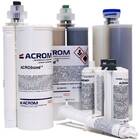
Bi-component epoxy adhesive
The ACROBOND® EP range constitutes a collection of cutting-edge bonding solutions, specifically developed for the assembly of demanding materials. Formulated from high-performance epoxy resins, these adhesives stand out for their exceptional durability and capacity to create permanent structural bonds. Whether in single-component or two-component versions, epoxy technology is the ideal response for applications requiring extreme mechanical resistance on substrates such as metals, composites, glass, or wood derivatives.
View more
Epoxy Technology in Industrial Environments
Using the ACROBOND® EP range in production allows you to meet the most complex technical challenges, where assembly reliability is critical.
-
Maximum Structural Resistance: Epoxy resins offer the highest tensile and shear performance, advantageously replacing traditional mechanical fasteners.
-
Protection and Durability: Highly valued for their resistance to wear, chemicals, abrasion, and impact, they ensure long-term surface protection.
-
Dimensional Stability: The combination of the resin and its hardener guarantees shrinkage-free polymerisation, essential for the precision of technical parts.
-
Process Adaptability: From fast-setting to slow-setting bonding for large surfaces, our range adapts to your cycle times and implementation constraints.
Technical Comparison: Two-Component vs Single-Component Epoxy
This table helps guide your technological choice according to your polymerisation and storage requirements.
|
Technical Criterion |
Single-Component Epoxy |
|
|
Implementation |
Resin + hardener mix (1:1 or 2:1) |
Ready to use (single component) |
|
Polymerisation |
Room temperature (can be heat-accelerated) |
Strictly requires heat curing |
|
Target Substrates |
Metals, Glass, Wood, Composites |
Specific metallic assemblies |
|
Key Strengths |
Versatility and standard storage |
Ultimate thermal and mechanical resistance |
|
Application |
Pneumatic or manual dispenser gun |
Syringe or automated dispensing |
FAQ: The Essentials on Epoxy Adhesives
1. What is the difference between fast-setting and slow-setting?
A fast-setting epoxy adhesive (such as ACROBOND EP 215) allows for part handling in a few minutes, ideal for small assemblies. A slow setting is essential for large surfaces to guarantee sufficient open time for adjusting the substrates.
2. How to guarantee optimal adhesion on metals?
Although epoxies are highly performant, rigorous degreasing with a cleaner from the ACRODIS range is indispensable to eliminate any trace of greasy pollution before application.
3. Can difficult plastics be bonded with epoxy?
Epoxy is generally not recommended for low surface energy plastics (PE/PP). For these materials, turn to our dedicated solution: ACROBOND A 260 MP.
4. Do epoxy adhesives resist chemical environments?
Yes, this is one of their major assets. Once polymerised, the epoxy resin is inert and perfectly resists oils, solvents, and numerous corrosive agents.
5. What is the advantage of two-component cartridge packaging?
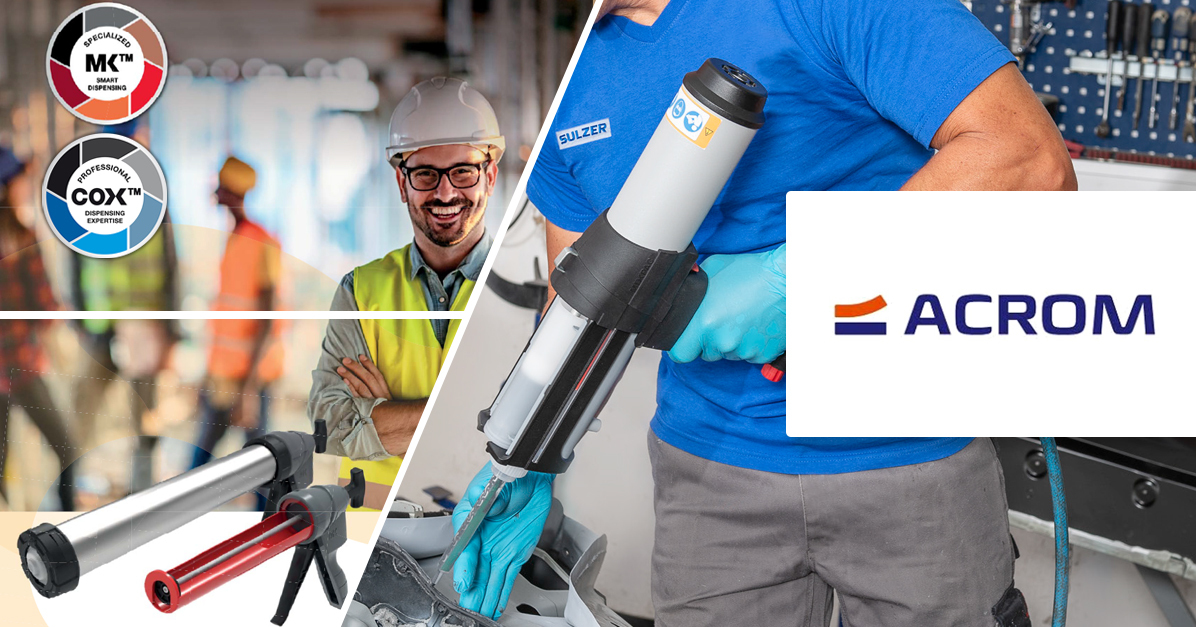
It guarantees a perfect and constant mixing ratio. Using an electric or pneumatic dispenser gun ensures precise dispensing without product waste.
Get a Personalised Recommendation
The choice of an epoxy adhesive depends on the geometry of your parts and their final environment (temperature, humidity). As a specialist for over 20 years, ACROM supports you in selecting the most cost-effective and high-performance reference for your project. Contact our technicians for a personalised study.