Bi-component adhesive PUR
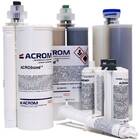
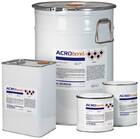
Two-component polyurethane adhesives (or 2K PU) constitute the ideal technological response for industrial assemblies requiring both excellent structural hold and a certain flexibility. Formulated from a polyurethane resin and a hardener, the ACROBOND 2K PU range guarantees controlled polymerisation, independent of ambient humidity. Highly acclaimed in the automotive, marine, construction, and aerospace sectors, this technology allows for the durable bonding of a very wide variety of substrates (metals, plastics, composites, wood) subjected to severe stress.
View more
Polyurethane Technology in Industrial Environments
Adopting two-component polyurethane chemistry resolves complex assembly issues on your production lines:
- Resistance to Dynamic Stress: Unlike very rigid adhesives that can break under stress, polyurethane absorbs vibrations, impacts, and differential thermal expansion phenomena between two materials.
- Chemical and Climatic Shield: Assemblies bonded with the ACROBOND range present an exceptional barrier against moisture, salt water, hydrocarbons, and numerous chemical agents.
- Controlled Production Rate: The chemical reaction (cross-linking) between the two components allows for deep and rapid curing, accelerating the handling of parts on the assembly line.
- Multi-Material Versatility: Excellent wettability allowing for heterogeneous assembly (e.g., steel/composite or plastic/wood) without compromising the final strength.
Technical Comparison: Two-Component Polyurethane vs Two-Component Epoxy
To help guide your choice according to the physical constraints of your assembly, here are the main differences between these two major families of structural adhesives:
|
Technical Criterion |
Two-Component Polyurethane (PU) ZIP |
Two-Component Epoxy ZIP |
|
Joint Nature |
Semi-rigid to rigid |
Very rigid |
|
Vibration Absorption |
Excellent |
Low |
|
Shear Resistance |
Very good |
Extreme |
|
Thermal Behaviour |
Absorbs expansion |
Can crack on large surfaces |
|
Preferred Fields |
Bodywork, marine, sandwich panels |
Aeronautics, heavy metallic inserts |
Technical FAQ: The Essentials on 2K PU Adhesives
1. How to guarantee a perfect mix of the two components?
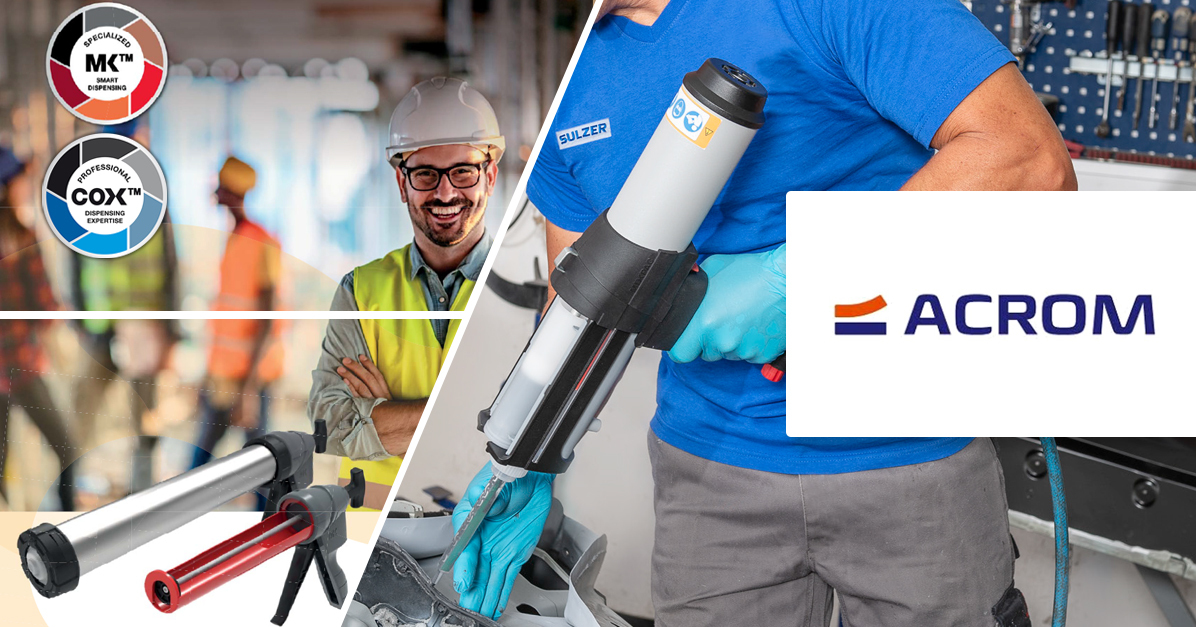
Our ACROBOND 2K PU adhesives are packaged in twin cartridges. Using a two-component dispenser gun combined with a static mixing nozzle guarantees an always exact resin-to-hardener ratio, without the risk of human error.
2. Do two-component polyurethane adhesives require a primer?
On the majority of substrates (wood, foams, certain metals), the adhesion power is sufficient after a simple degreasing. For very smooth or specific substrates (raw aluminium, low surface energy plastics), the application of an ACROM primer may be recommended to maximise grip.
3. What is the difference with a single-component PU adhesive?
A single-component polyurethane adhesive polymerises using atmospheric moisture. Its curing is therefore slow (a few millimetres per 24 hours) and depends on the weather. The two-component version cross-links via an internal chemical reaction, ensuring fast, homogeneous, and complete curing, even in thick layers or confined spaces.
4. Do PU adhesives emit strong odours in the workshop?
Polyurethane chemistry contains isocyanates. It is therefore recommended to use these products in a ventilated workshop. We also offer optimised formulations to reduce the HSE impact on operators.
Validate Your Assembly Solution
The choice of a polyurethane adhesive depends on the desired open time, the nature of your materials, and the final mechanical constraints. ACROM technicians support you in dimensioning your bonding process, from cartridge selection to dispensing equipment. Contact us to test the ACROBOND 2K PU range directly on your parts.