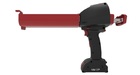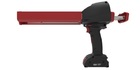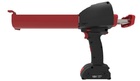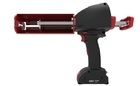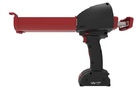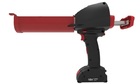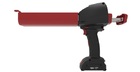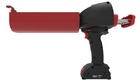
Two-component electric dispenser
The two-component electric dispenser gun (battery-operated) represents a major technological evolution for dispensing structural adhesives in industrial environments. It combines the extrusion force indispensable for high-viscosity products with total freedom of movement, freed from compressed air hoses. Designed to handle twin cartridges and complex mixing ratios (1:1, 2:1, 4:1, and 10:1), this applicator guarantees exceptional bead consistency. As an expert, ACROM relies on the expertise of Medmix (COX, MK, and Sulzer brands) to offer you robust tools combining 18V performance and electronic precision.
View more
Two-Component Electric Technology in Industrial Environments
Adopting a two-component electric applicator meets flexibility and quality imperatives on modern assembly lines.
-
Mixing Ratio Mastery: The motorised double-thrust system ensures synchronised piston advancement, guaranteeing strict adherence to the ratio (e.g., 10:1 for ACROBOND A 260 MP ) and optimal polymerisation of the adhesive.
-
Autonomy and Versatility: Equipped with high-capacity Li-ion batteries, these dispenser guns are ideal for hard-to-reach areas or on-site maintenance work where compressed air is unavailable.
-
Electronic Flow Control: The variable speed drive allows dispensing to be adjusted to the complexity of the part, reducing product waste and improving the aesthetic finish of the joints.
-
Operator Comfort (HSE): Electric assistance eliminates the physical effort associated with manual extrusion, drastically reducing the risk of MSDs (Musculoskeletal Disorders) during repetitive applications.
Technical Comparison: Electric vs Pneumatic vs Manual Dispenser Gun
|
Technical Criterion |
|||
|
Mobility |
Maximum (Cordless) |
Limited (Air connection) |
Total |
|
Dispensing Precision |
Electronic (Constant thrust) |
Pneumatic (Constant pressure) |
Variable (Manual thrust) |
|
Operator Effort |
None (Motor assistance) |
None (Air assistance) |
High (Depending on viscosity) |
|
Recommended Usage |
Confined areas, construction sites, maintenance |
Fixed stations, high production rates |
Short runs, after-sales, rework |
FAQ: The Essentials on Battery-Operated Applicators
1. Can very viscous adhesives (Epoxy/Methacrylate) be extruded on battery power?
Absolutely. The Electraflow range dispenser guns develop a thrust force of up to 5 kN. They are designed to easily handle dense structural adhesives, such as our epoxy adhesives or high-performance methacrylates.
2. How to ensure the mix is correct with an electric dispenser gun?
The tool ensures regular thrust on both cartridge pistons. For a perfect mix, it is essential to use the mixing nozzle recommended for your product, as is the case for ACROBOND A 270 MP (1:1 ratio).
3. Does the dispenser gun have an anti-drip system?
Yes. Upon releasing the trigger, the motor automatically performs a slight retraction of the rack. This instantly stops the pressure in the cartridge and prevents the adhesive from continuing to flow.
4. Are the batteries interchangeable?
Our models use standard batteries (often compatible with the CAS system), allowing for rapid recharging and continuous use across multiple workstations.
5. How do I maintain a two-component electric dispenser gun?
Maintenance is minimal: simply keep the racks clean and lightly lubricated, and check that the cartridge holders are correctly secured to avoid any imbalance during thrust.
Get a Personalised Recommendation
The choice of the right electric dispenser gun depends directly on your adhesive's ratio and the volume of your cartridges (50ml, 200ml, 400ml, or 490ml). As an expert in bonding solutions for over 20 years, ACROM helps you configure the ideal equipment to optimise your processes. Contact us for a technical study or equipment trial.
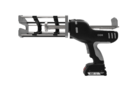
The Electraflow VBE 400 MR stands out as a high-performance electric applicator for dispensing technical adhesives. This 400ml two-component dispenser gun frees users from the logistical limitations of compressed air lines while maintaining a constant thrust force.
Thanks to its ergonomic design and balanced centre of gravity, it significantly reduces the risks of musculoskeletal disorders (MSDs) during intensive use.