Water-based adhesive
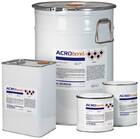
Water-based adhesives (or aqueous adhesives) constitute a major alternative to solvent-based solutions for assembling porous materials. Unlike reactive chemistries, they use water as a carrier: the adhesive bond forms through liquid evaporation and absorption by the substrates. The ACROBOND range is specifically formulated to meet the requirements of joinery, packaging, and industrial craftsmanship, offering high bond strength without the constraints associated with chemical fumes.
View more
Water-Based Technology in Industrial Environments
Switching to a water-based adhesive addresses occupational health and environmental compliance (VOC) imperatives. These adhesives are odourless and non-toxic, allowing their use in closed workshops without requiring heavy extraction systems.
-
Versatility on Porous Substrates: ACROBOND water-based adhesives excel on wood, paper, cardboard, fabric, and foams. They penetrate the fibres to create a durable structural bond.
-
HSE Safety (Health, Safety, Environment): The absence of flammable solvents simplifies storage and reduces fire risks, while protecting operator health.
-
Flexibility After Drying: Once cured, the adhesive retains a certain flexibility, allowing the assembly to withstand light mechanical variations and thermal expansion.
Technical Comparison: Water-Based vs Solvent-Based Adhesives
This table allows you to visualise the operational differences to guide your choice according to your manufacturing process.
|
Technical Criterion |
Water-Based Adhesive |
Solvent-Based Adhesive (Neoprene/Contact) |
|
HSE Impact |
Odourless, non-toxic, VOC-free |
Strong odour, flammable, high VOCs |
|
Setting Speed |
Depends on evaporation (slower) |
Instantaneous or fast (Flash-off) |
|
Target Substrates |
Porous materials (Wood, Cardboard) |
Multi-substrate (Metal, Rubber) |
|
Cleaning |
With water (before drying) |
Specific solvents required |
Technical FAQ: The Essentials on Water-Based Adhesives
1. Is water-based adhesive frost-resistant? This is the critical storage point. Water-based adhesives are destroyed by frost (irreversible separation of components). They must absolutely be stored between 10°C and 25°C. A product that has frozen is permanently unusable.
2. How to clean tools after application? As long as the adhesive is not dry, cleaning brushes, rollers, or nozzles is simply done with warm water. Once cured, the adhesive becomes water-resistant and requires mechanical action or specific cleaning solvents.
3. Can you bond plastic or metal with a water-based adhesive? Generally, no. For a water-based adhesive to work, at least one of the two substrates must be porous to absorb the water. For metal or non-porous plastics, turn to our Methacrylate or MS Polymer ranges.
4. What is the role of additives in the ACROBOND range? Certain products include specific agents to modify viscosity, increase moisture resistance (D3/D4 standards for wood), or accelerate the initial setting speed (tack).
5. Will the water-based adhesive yellow over time? Our industrial formulations are designed to remain stable. Unlike low-end adhesives, the ACROBOND range offers excellent resistance to UV and ageing, avoiding unsightly marks on wood or paper assemblies.
Get a Personalised Recommendation
The choice of a water-based adhesive must be validated according to your substrates and cycle times. As a specialist in industrial adhesives for over 20 years, ACROM supports you in selecting the most cost-effective reference for your application.