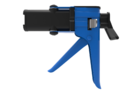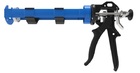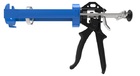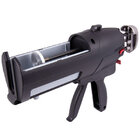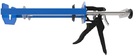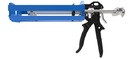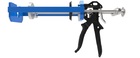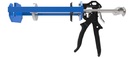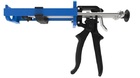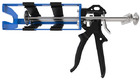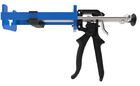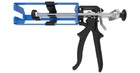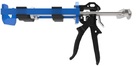
Two-Component Manual Dispensers
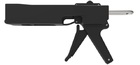
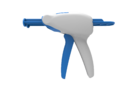
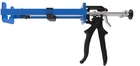
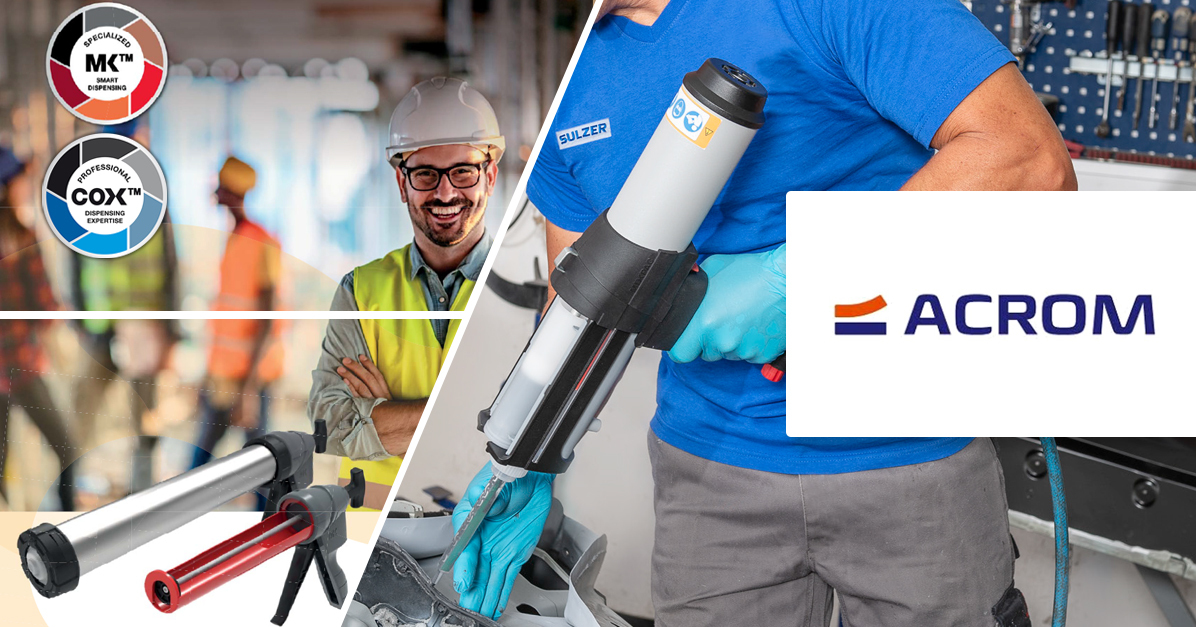
Using a manual two-component dispenser is the preferred solution for manufacturers seeking total flexibility during small-series assembly or on-site maintenance. Unlike automated systems, a manual applicator allows for the precise and immediate dispensing of complex chemistries (Epoxy, PU, MMA) without depending on a power source. Each model in our range guarantees the reliability of your structural bonds through robust mechanical thrust.
View more
What is a Two-Component Dispenser?
A two-component (2K) dispenser is a precision extrusion tool designed to simultaneously distribute two substances (a base and a hardener) stored in separate compartments of a cartridge. This system ensures perfect dosing via a dual thrust mechanism acting on both cartridge pistons. It is the indispensable tool for 2K chemistries that require a strict mixing ratio to achieve their final mechanical performance.
Why Choose a Manual 2K Dispenser?
Advantage #1: Homogeneous Mixing with Total Autonomy
The primary advantage of a manual model is mobility. it allows for intervention anywhere, whether on an outdoor construction site or in workshop areas lacking a compressed air network.
-
Dosing Repeatability: The internal mechanics force a synchronous advance of the drive rods. This synchronization ensures the ratio between base and hardener remains constant from the beginning to the end of the cartridge, preventing dosing errors that could weaken the assembly.
-
Extrusion Control: The sensitivity of the manual trigger provides the operator with direct tactile control over the flow rate. This precision is vital for applying glue dots or beads on complex geometries where reactivity is key.
Advantage #2: Ergonomics Designed for High Viscosities
Even without pneumatic assistance, ACROM professional models incorporate high thrust ratios (mechanical advantage) to overcome the resistance of the densest adhesives.
-
400ml Models for Heavy-Duty Applications: The 400ml 2K dispenser is the industrial standard for structural bonding. It supports various ratios (1:1, 2:1, 10:1) while providing the robustness needed for vehicle bodywork or steel structure assembly.
-
50ml Models for High Precision: 50ml dispensers are dedicated to micro-assembly and electronics. Their lightweight design significantly reduces muscle fatigue during repetitive tasks requiring high dexterity.
Advantage #3: Cost-Effectiveness and Waste Control
Using a high-quality 2K adhesive gun drastically reduces waste. By ensuring a correct mix right out of the nozzle, you eliminate scrap caused by poor curing, thereby optimizing your material consumption.
Manual Dispenser vs. Automated System: Which is right for your workshop?
This comparison helps determine if manual autonomy is preferable to the power of assisted systems for your specific setup.
|
Technical Criterion |
Manual Dispenser |
Pneumatic / Electric System |
|
Power Supply |
None (Total Autonomy) |
Compressed Air or Battery |
|
Setup |
Instant |
Requires connection or charging |
|
Typical Use |
Maintenance, After-sales, Small series |
Intensive production, High rates |
|
Mechanical Thrust |
Manual (Fixed ratio) |
Assisted (Adjustable via pressure/variable speed) |
Which Dispenser for Your Application?
Your choice of applicator should be based on the chemistry used and the frequency of application.
-
Industrial Bodywork and Automotive: For bonding panels, reinforcements, or wing liners, a manual gun allows the operator to move around the vehicle without being hindered by cables or hoses, while providing the necessary force for PU and epoxy adhesives.
-
Steel Construction and Metalwork: For injecting anchors or assembling composite structures, 400ml models with reinforced frames are essential to withstand the pressures exerted by high-thixotropy resins.
-
Precision Assembly and Electronics: In sectors requiring very small glue dots on fragile components, the 50ml dispenser offers a "pen-like" or lightweight grip for surgical control of the bead deposition.
FAQ: Manual Two-Component Dispensers
1. Can I use the same dispenser for different ratios (1:1, 2:1, 10:1)?
Some models are versatile and accept conversion kits (interchangeable pistons), but most manual guns are calibrated for a specific ratio to guarantee perfectly symmetrical thrust.
2. How do I prevent the adhesive from hardening inside the dispenser?
The adhesive does not harden in the dispenser itself, but in the static mixer (the nozzle). If you take an extended break, leave the used mixer in place; it acts as an airtight seal. Simply replace it with a new one to resume work.
3. Why is it difficult to pull the trigger with my 400ml cartridge?
This is often due to the product's high viscosity or an insufficient thrust ratio on the gun. Also, check that the cartridge outlets are not obstructed before attaching the mixer.
4. What is the lifespan of an ACROM manual 2K dispenser?
Designed for industrial use (featuring brands like COX or MK), our dispensers are equipped with treated wear parts. With regular cleaning of the drive rods, they can withstand several years of intensive use.
5. How do I know if my pistons are properly balanced?
Before attaching the mixer, always extrude a small amount of product. If both components (base and hardener) emerge simultaneously, your pistons are balanced, and you can install the mixing nozzle.
Request a Quote
The choice of dispensing equipment should never be left to chance. ACROM exclusively selects solutions proven for their reliability and precision.
Need technical advice or a quote? Our experts are at your disposal to guide you toward the model best suited to your chemistry.